
THE CAMPO MA’AN GREAT APES AND ELEPHANT PROTECTION PROGRAM (CAMGAEPP)
Background
Located in the South Region of Cameroon, the Campo Ma’an National Park (CMNP) is home to a myriad of wildlife species of global significance and supports the livelihoods of several communities around the Park. The Park is, however, increasingly facing threats on multiple scales, ranging from encroachment by agro-industrial plants to poaching and human wildlife conflicts (HWCs). Human-elephant conflict, poaching of gorillas, and the destruction of wildlife habitats are currently on an unprecedented rise, and it is therefore imperative to secure the remaining populations of elephants and great apes, whose loss will profoundly impact larger ecosystems, causing irreversible damage to the park’s overall health.
About the CAMGAEPP
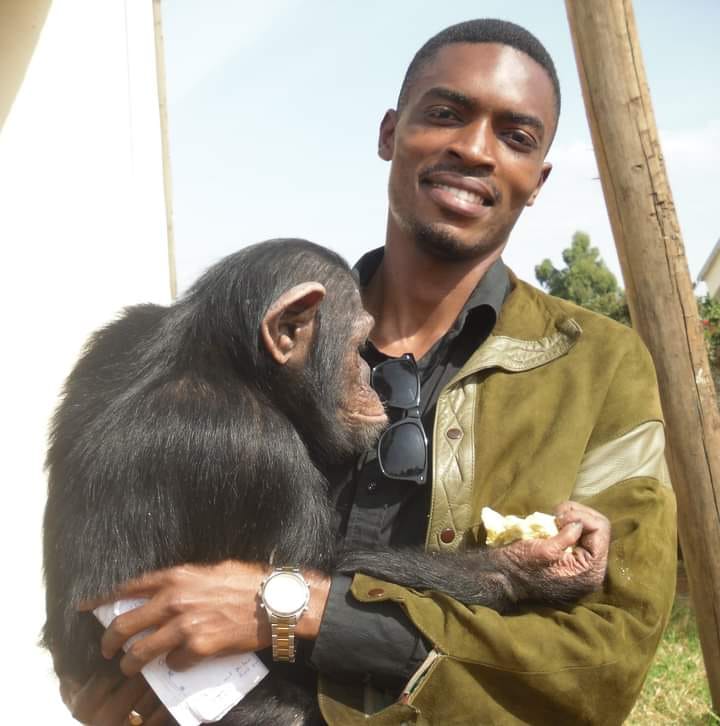
Initiated in 2018, the aim of the CAMGAEPP program is to contribute to the mitigation of bushmeat hunting and human-wildlife conflicts around the Campo Ma’an National Park. The CAMGAEPP program intervenes through an array of activities including research, environmental education, design and implementation of sustainable nature-based solutions and locally-tailored tools for the mitigation of human-wildlife conflict, and the development of livelihood alternatives to hunting.
How ABOYERD is Contributing to the Conservation of Great Apes and Forest Elephants in the Campo Ma’an National Park.
i. Research
Research is instrumental in addressing the complex challenges of deforestation and human-wildlife conflict plaguing the Campo Ma’an National Park. By investigating drivers of deforestation/habitat loss and human-wildlife conflict, ecological and socio-economic surveys provide valuable insights on the status and dynamics of these threats. Research results serve as a springboard for the development of nature based solutions to the conflict and the development of sustainable solutions that support both local communities and wildlife conservation.
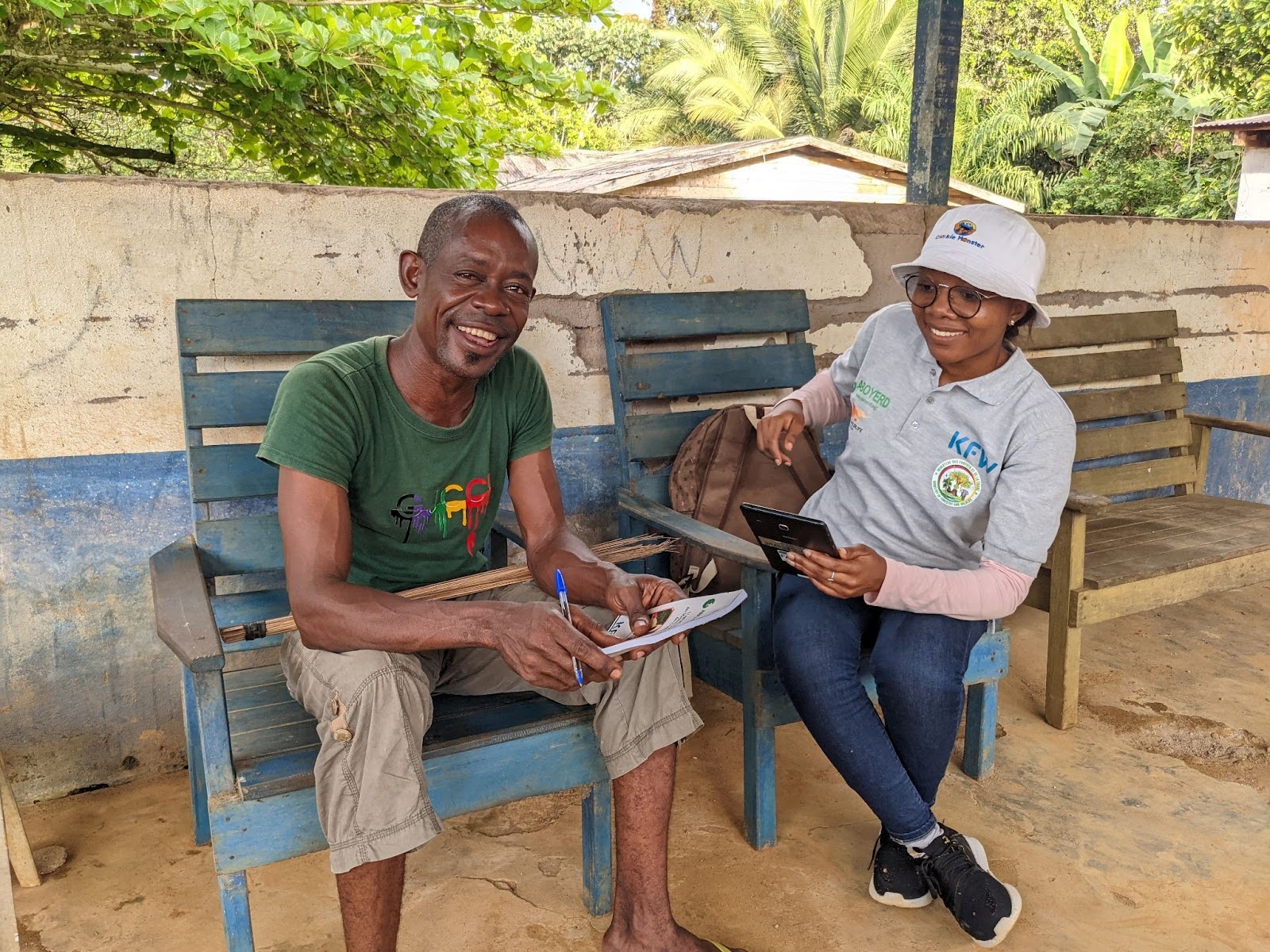
Sociological survey of local perceptions vis-à-vis wildlife conservation in the CMNP.
ii. Conservation Education:
Environmental education is critical to improving public support and tolerance for wildlife within and outside of protected areas. Lack of awareness of biodiversity and its importance often leads to local communities viewing biodiversity as a resource to be exploited and not as a resource to be protected, as should be the case.
ABOYERD is championing awareness-raising at different community levels and through different means; educating children through the instrumentality of wildlife clubs and adults through workshops and radio campaigns as a strategic way of ensuring that the message of biodiversity conservation reaches all age segments. In an optimistic scenario, conservation education would promote commitment towards biodiversity conservation and raise awareness on the essential role of wildlife in the ecosystem functioning of the Park.
Community Workshops
Beyond schools, ABOYERD has been organizing community workshops to raise awareness on pressing conservation issues such as:
Human-wildlife conflict
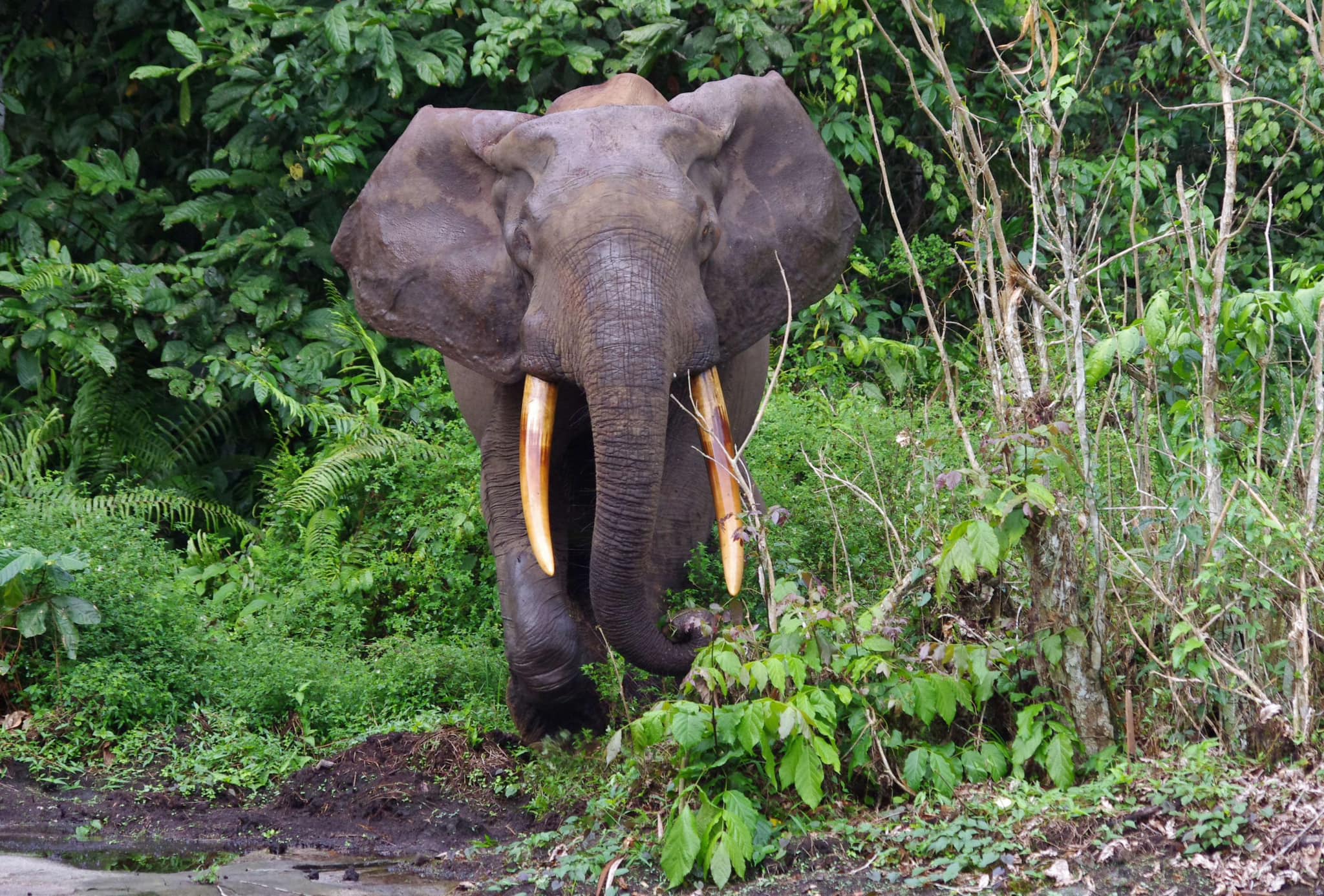
Organized annually, workshops on human-wildlife conflict seek to sensitize local communities on the role they play in the conflict, the scale of the problem and its effects on the environment. By highlighting the root causes of human-wildlife conflict, and the role communities play in aggravating the problem, workshops equally pave the way for training on the use of nature-based solutions for the mitigation of human-wildlife conflict. The most salient impact that these workshops have had so far, is the fact that communities are increasingly owning up to the fact that they contribute recognizably to the human-wildlife conflict situation plaquing the area, and are taking positive steps to curb this conflict. Community dwellers are halting encroachment into wildlife habitats to create new farms, and increasingly imploring nature-based solutions like Apiculture and the planting of citrus trees to protect their farmlands that are close to wildlife habitats.
Deforestation
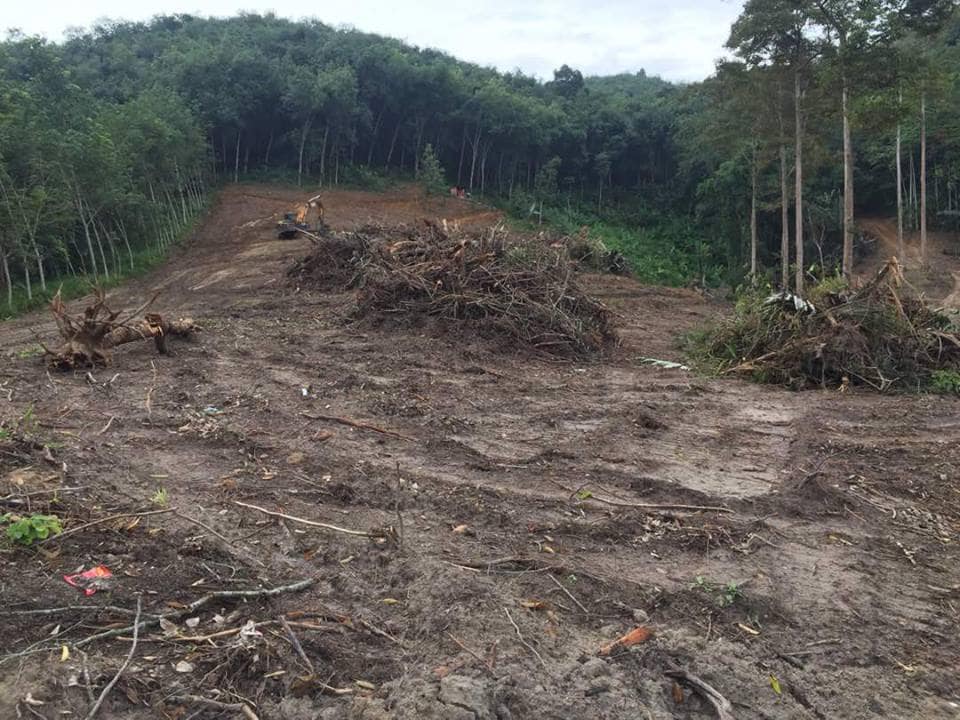
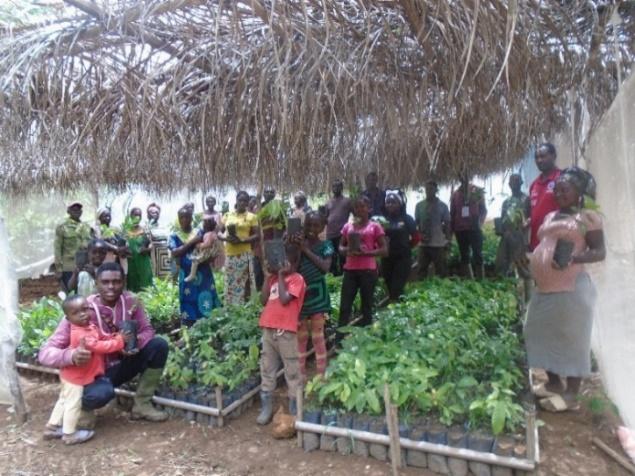
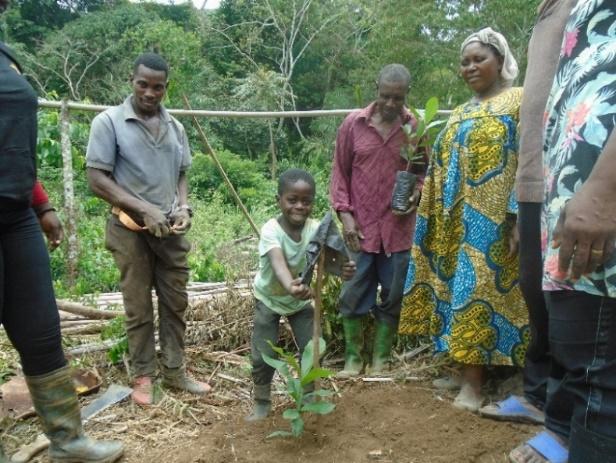
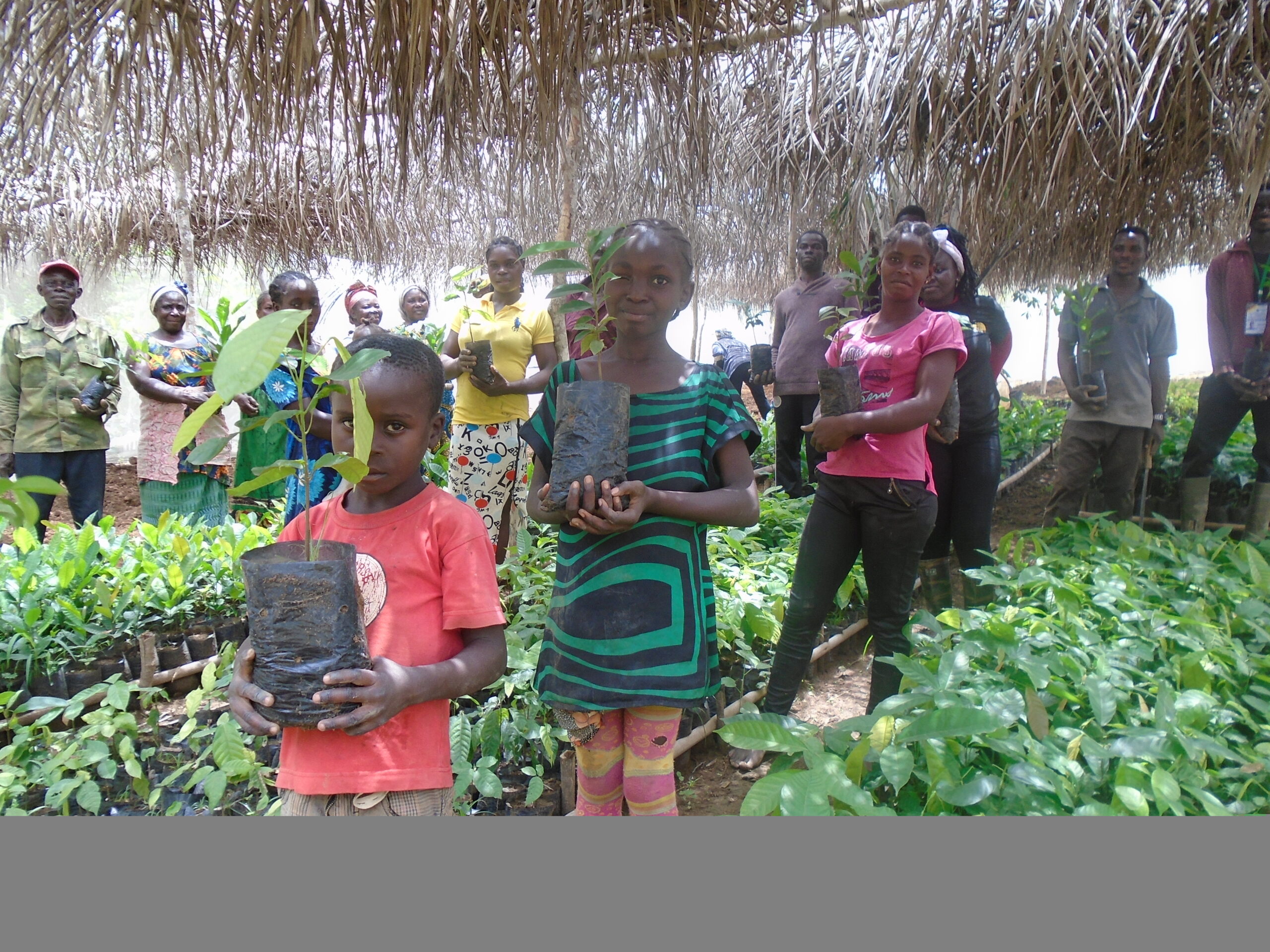
Workshops are equally organized yearly to sensitize communities around the park to raise awareness about deforestation and promote sustainable land-use practices. These workshops serve as a fertile ground to sensitize communities on the importance of trees in the ecosystem, causes of deforestation, the consequences of deforestation on local communities, and highlighting the role communities play in creating the problem. Workshops empower local communities with the requisite knowledge and skills to take action against deforestation, and workshop sessions often close with a practical phase of tree planting with participants. Community dwellers have embraced tree planting, and it is gradually becoming an unspoken norm in most communities.
Wildlife protection laws
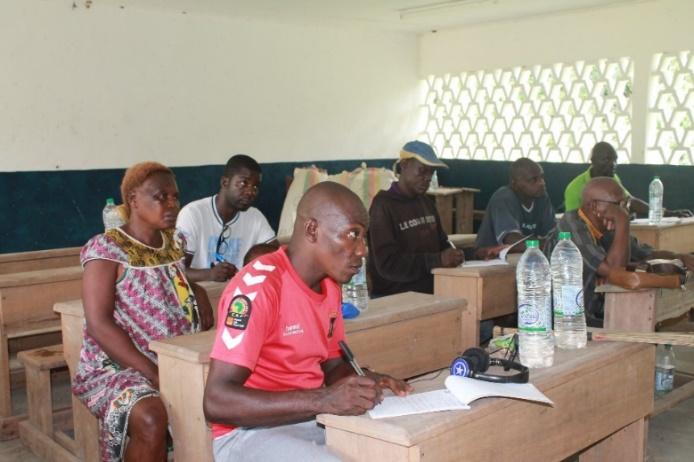
Workshops are held annually to sensitize local communities on relevant laws and policies protecting wildlife. These workshops raise awareness on the importance of biodiversity conservation and deter crimes related to wildlife and forests, while promoting compliance to laws. By sensitizing communities on these laws, communities are empowered to take action against poaching, wildlife trafficking and destruction of forests, ultimately leading to the protection of wildlife and their habitats. These workshops have had a significant impact. In addition to the fact that Community awareness about conservation regulation has increased, workshops have fostered a sense of responsibility and communities are becoming more proactive in reporting wildlife crimes.
These workshops have taken place in more than 6 local communities, engaging over 350 forest users annually. Through these sessions, ABOYERD aims to foster a deeper understanding of the legal and ecological importance of conservation, encouraging local populations to adopt sustainable practices. All workshops in communities are organized in collaboration with the conservation service. The purpose of this collaboration is to make workshops credible, leverage on the vast experience of the conservation service, and to ensure coherence and accuracy of information passed during workshops.
Education and training activities targeting adults take the form of community workshops and are geared towards improving local awareness on innovative techniques of handling human-wildlife conflicts, building local capacity on conflict prevention and resolution, increasing public understanding of human-wildlife conflict and the position of the law with regard to the conservation of wildlife.
Community Workshop to raise awareness on Wildlife Laws
Radio Campaigns:
Radio remains an effective means of transmitting conservation messages in communities around the Campo Ma’an National Park, especially to the elderly. Short radio plays conveying conservation messages are translated into local vernaculars and aired within fringe communities of the park. During live radio debates, representatives of local communities and members of the conservation service are invited to present their views on pertinent conservation topics familiar to the area.
Live radio debate at Beach FM CAMPO

School Programs
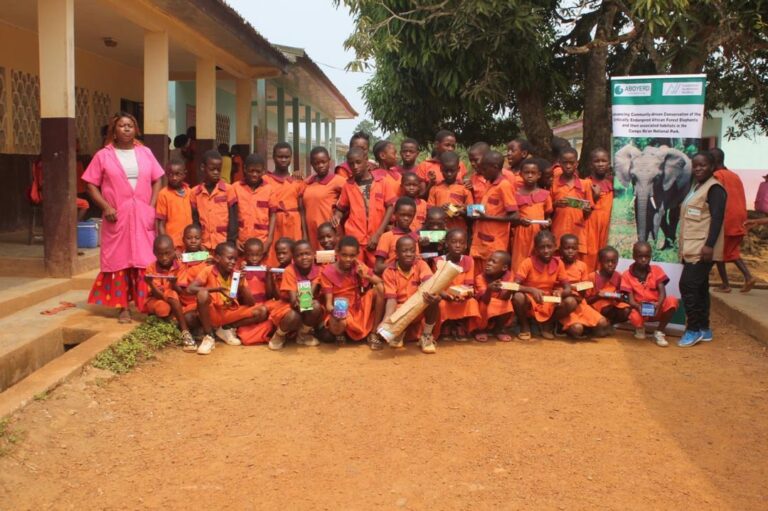
Wildlife conservation is intricately linked to the world of children and younger people in a myriad of ways. By teaching children and young persons that every animal, all nature, and all people have the right to life, we are instilling a culture of respect and appreciation of nature in younger persons. By establishing school wildlife clubs, ABOYERD is providing structured environmental education aimed at protecting the critically endangered forest elephants found in the Campo Ma’an National Park. These clubs are designed to inspire a sense of stewardship in young people, encouraging them to become future champions of biodiversity and sustainable development. Conservation lessons are taught and students equipped with knowledge on environmental sustainability and biodiversity conservation. These programs reach approximately 130 students annually, creating a ripple effect of environmental consciousness that extends beyond the classroom.
Wildlife Club members of Ecole Publique Inclusive Campo
Wildlife Club Activities:
Agricultural Projects:
Agricultural projects in schools have emerged as a vital component of community development, providing extensive benefits that extend beyond the school walls. Introducing agricultural projects in wildlife clubs serves as a tool to educate students on environmental stewardship, entrepreneurship, provide students with hands-on experience in sustainable gardening, and demonstrate the potential of agriculture in enhancing food security and building resilience to climate change in Campo.
Two smart Eco gardens have been successfully established in secondary schools and these gardens serve a dual purpose:
- Demonstration Farms: Showcasing the cultivation of organic vegetables and tree nurseries.
- Hands-On Learning: To instill a love for nature and a responsibility for greening their surroundings, students are involved in practical activities like gardening and tree planting initiatives. Two eco gardens have been created in schools and over 210 ornamental trees have been planted within school campuses and key locations around Campo. Worthy of mention, is the fact that the trees planted are doing well, and this is going a long way to inspire community members to take up tree planting as a serious activity. As a result of this initiative, tree planting is gradually becoming a norm in Campo and in addition to embracing sustainable agricultural practices, farmers are gradually incorporating tree planting in their practice, not just to improve soil fertility, but above all, as their contribution to the fight against climate change.
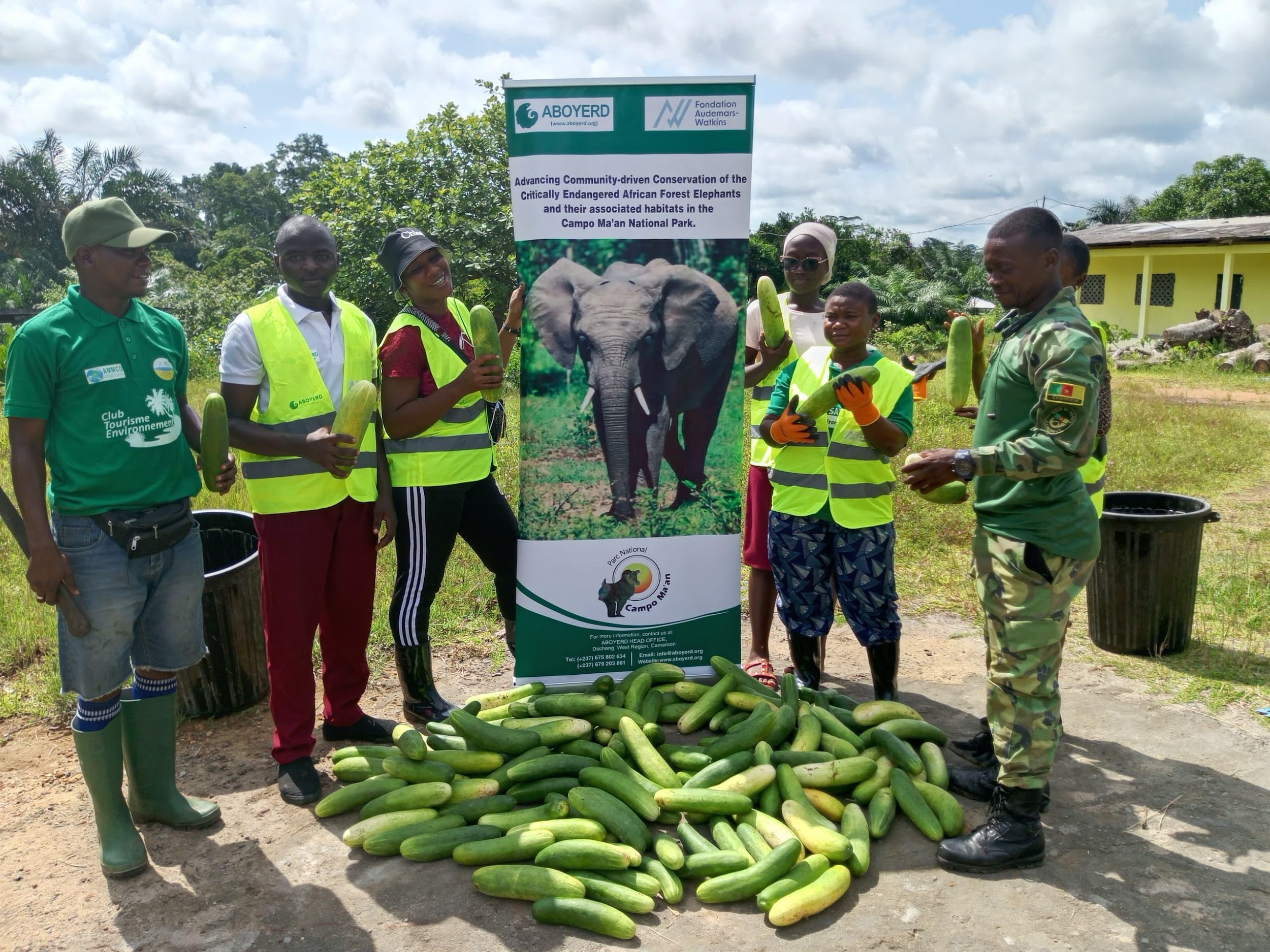
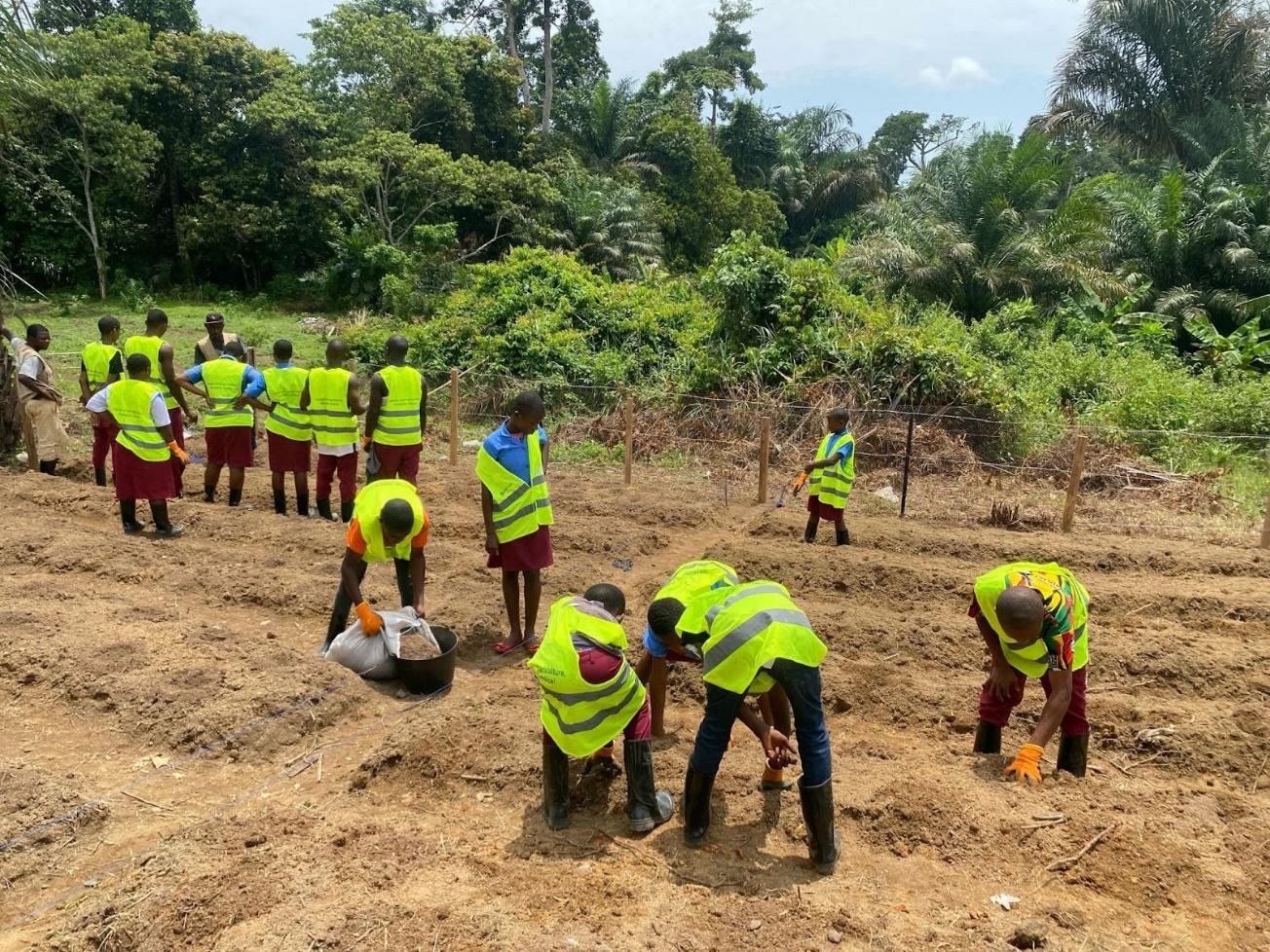
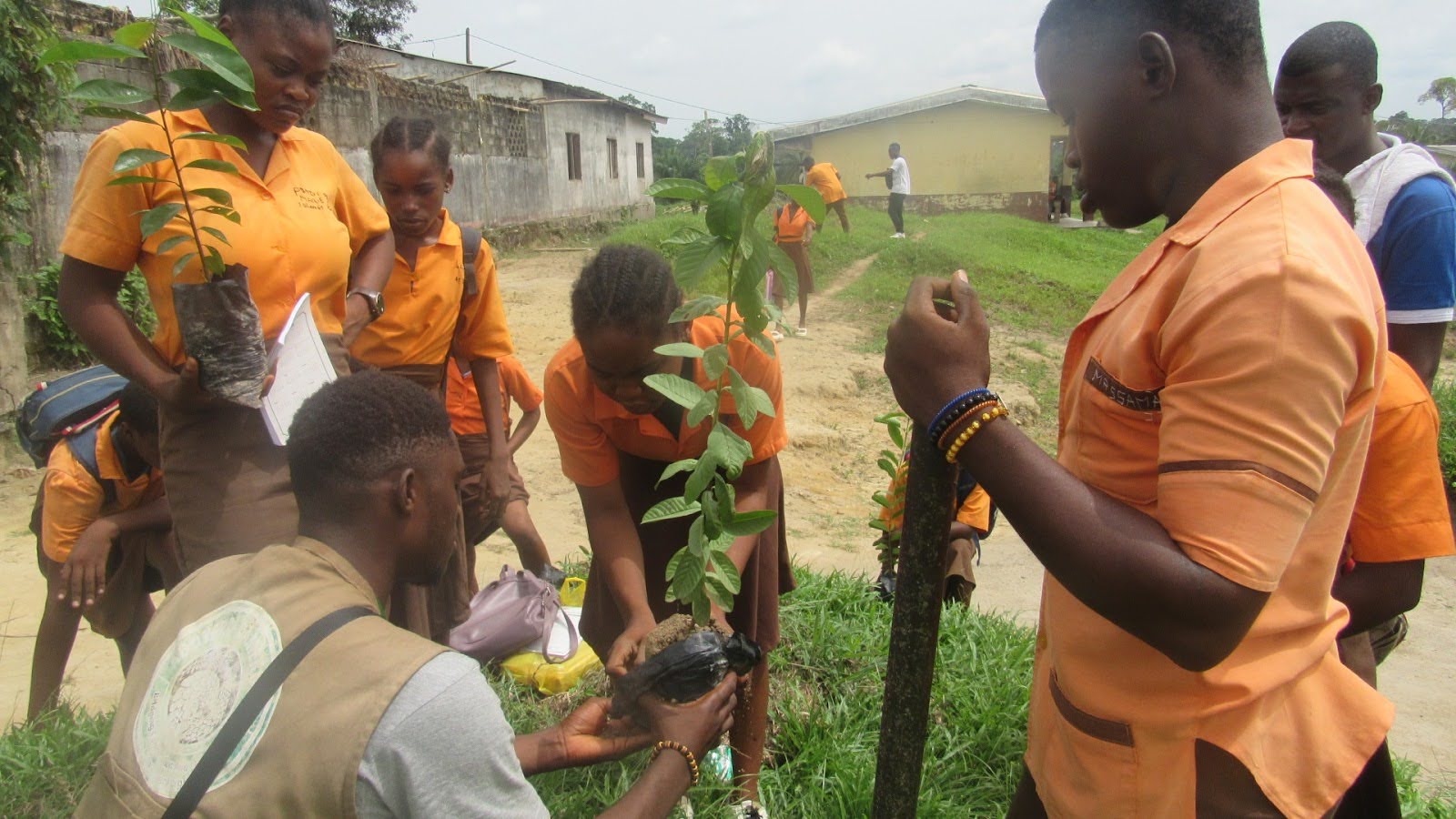
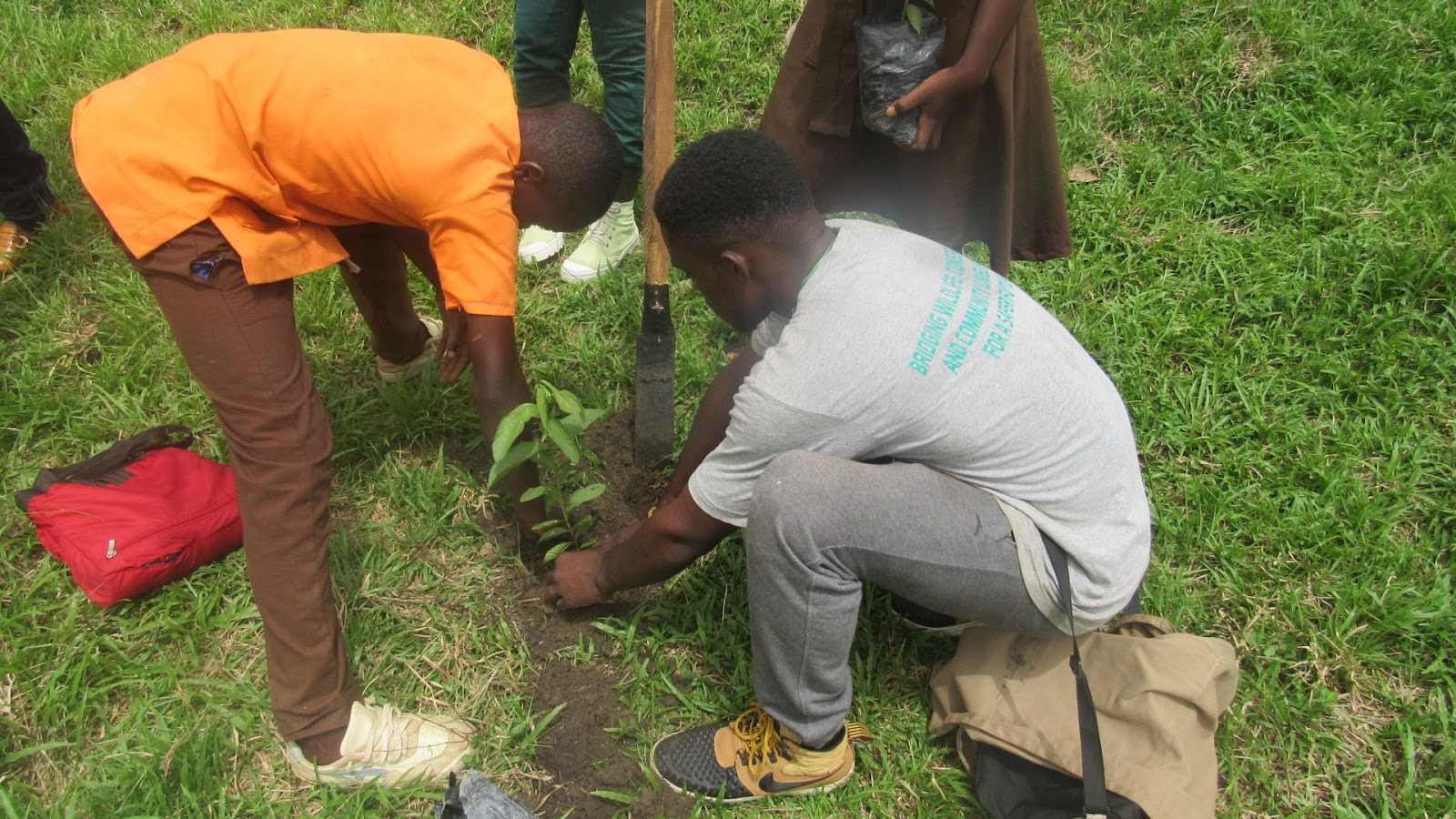
Wildlife Club Member of Lycee Moderne de Campo working on the school garden / Cucumbers produced by Wildlife Club in Lycée Moderne de Campo
Drama and Debates:
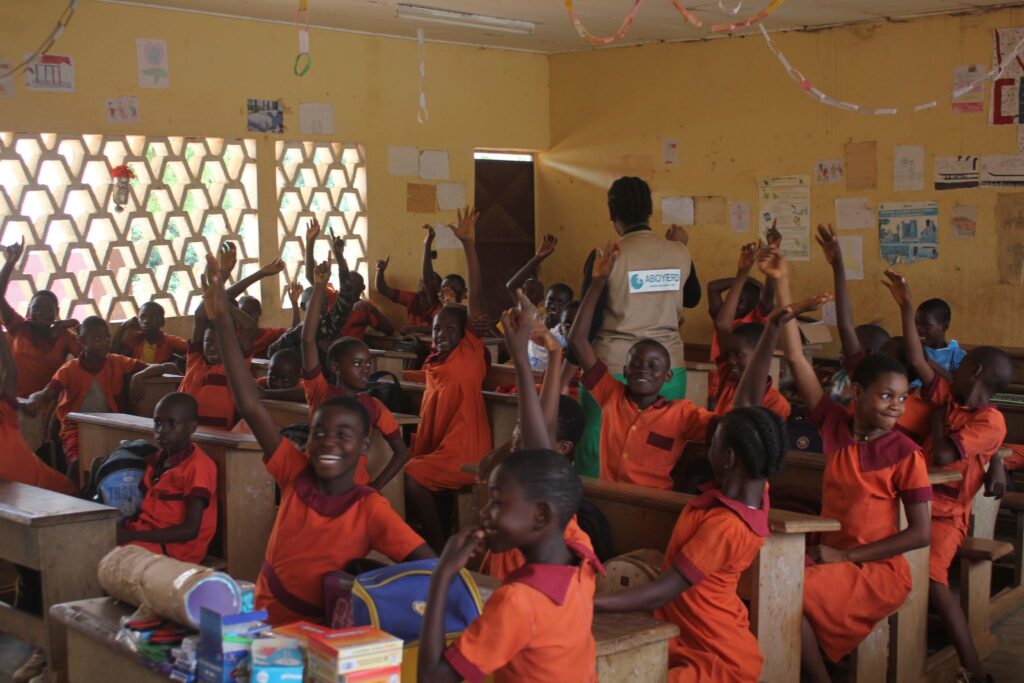
In wildlife clubs, dramas and debates play a crucial role in educating members about conservation issues, promoting empathy and awareness about wildlife protection. Through debates and dramas, wildlife club members develop critical thinking skills and become proactive champions for biodiversity conservation and sustainable environmental practices, ultimately leading to more effective wildlife protection and a healthier, more vibrant ecosystem.
Excursions:
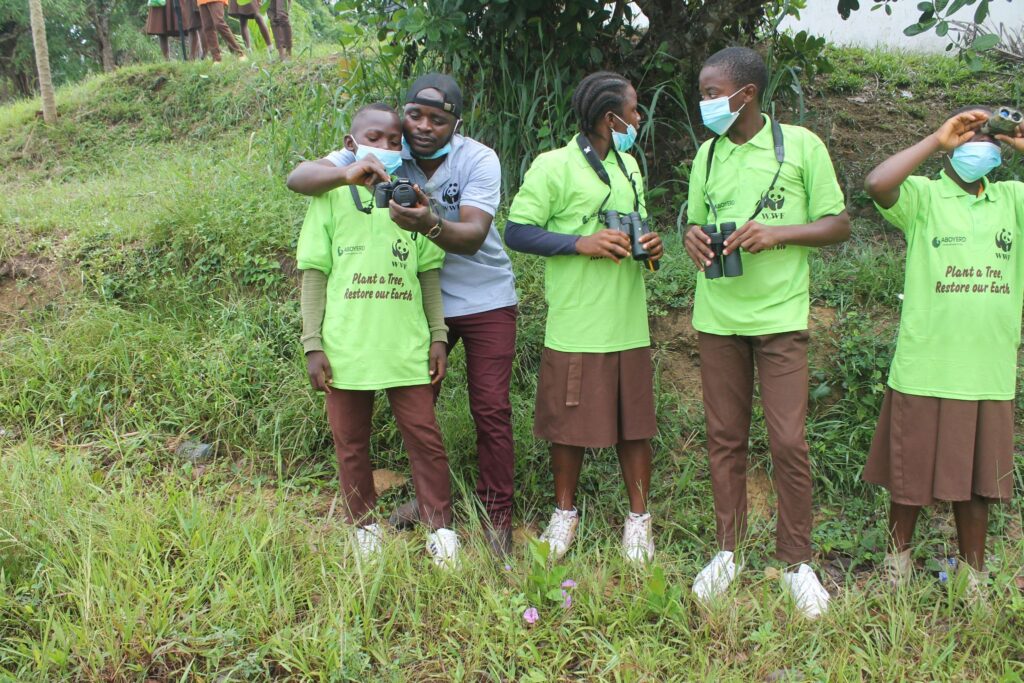
Field trips to conservation areas, allows members to observe and interact with diverse ecosystems and helps students connect theory to real-world experiences. These experiences cultivate in students a deeper appreciation of nature and inspires them to advocate for its preservation.
Participation in National Day Celebrations:
Wildlife club activities do not only end within school premises. Clubs participate in National Day celebrations like Youth Day (11th February), and 20th May. School wildlife Clubs use these days as an opportunity to raise public awareness on conservation issues, hence inspiring community engagement and action for environmental sustainability.
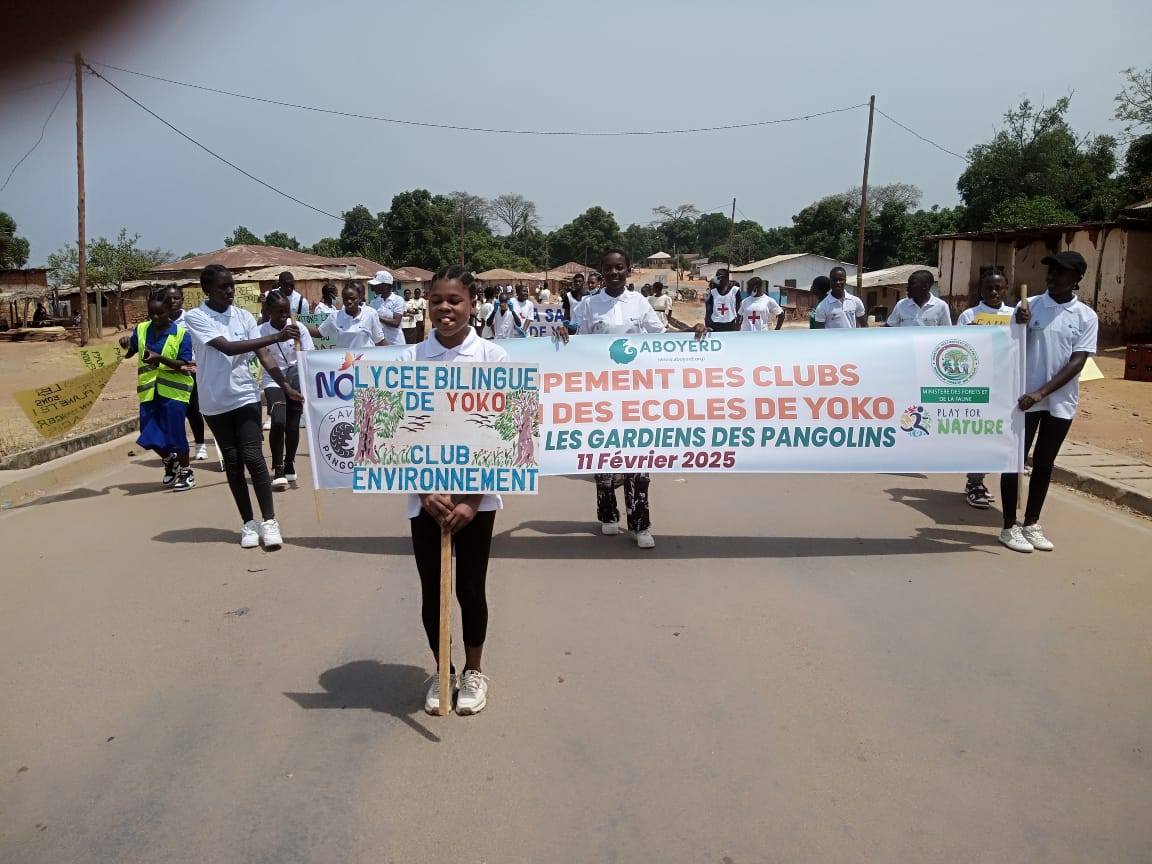
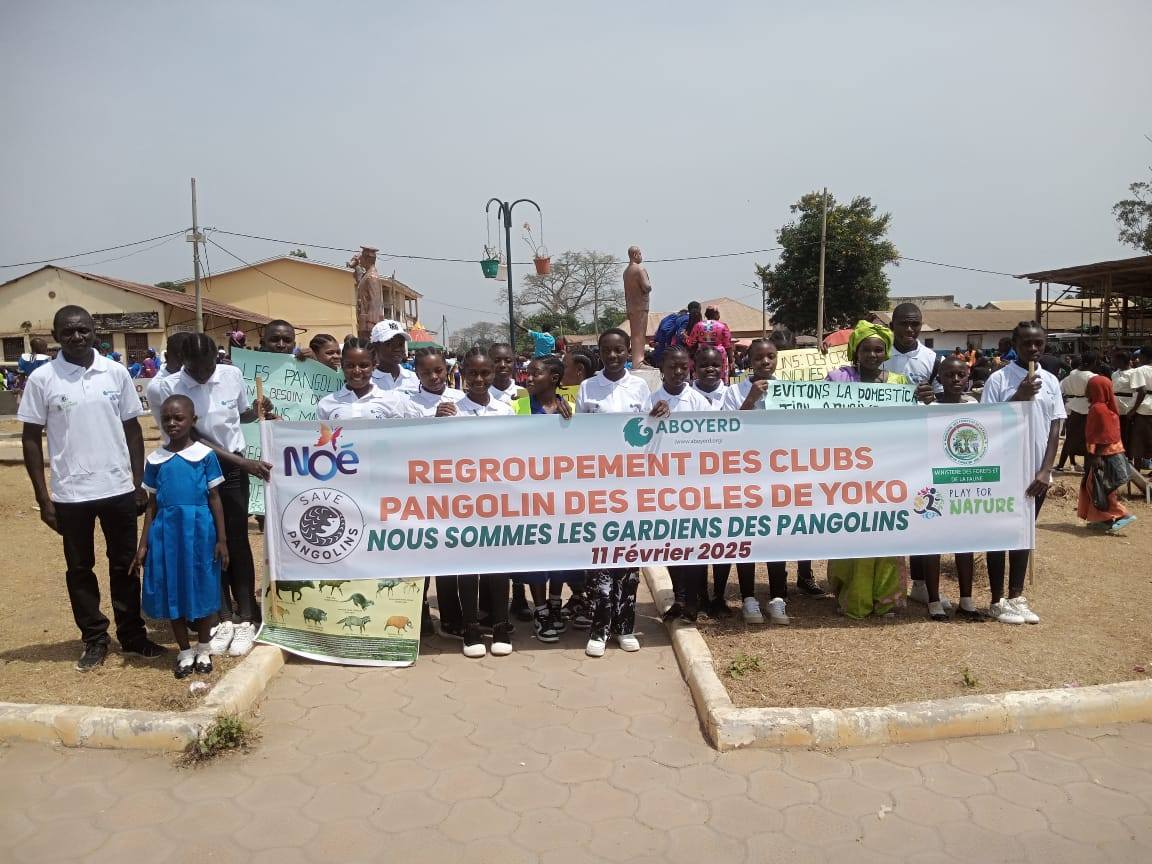
Wildlife Club members participating during Youth Day Celebration in Campo
Development of Alternative Livelihood Activities/ Mitigation of Human-Elephant Conflict
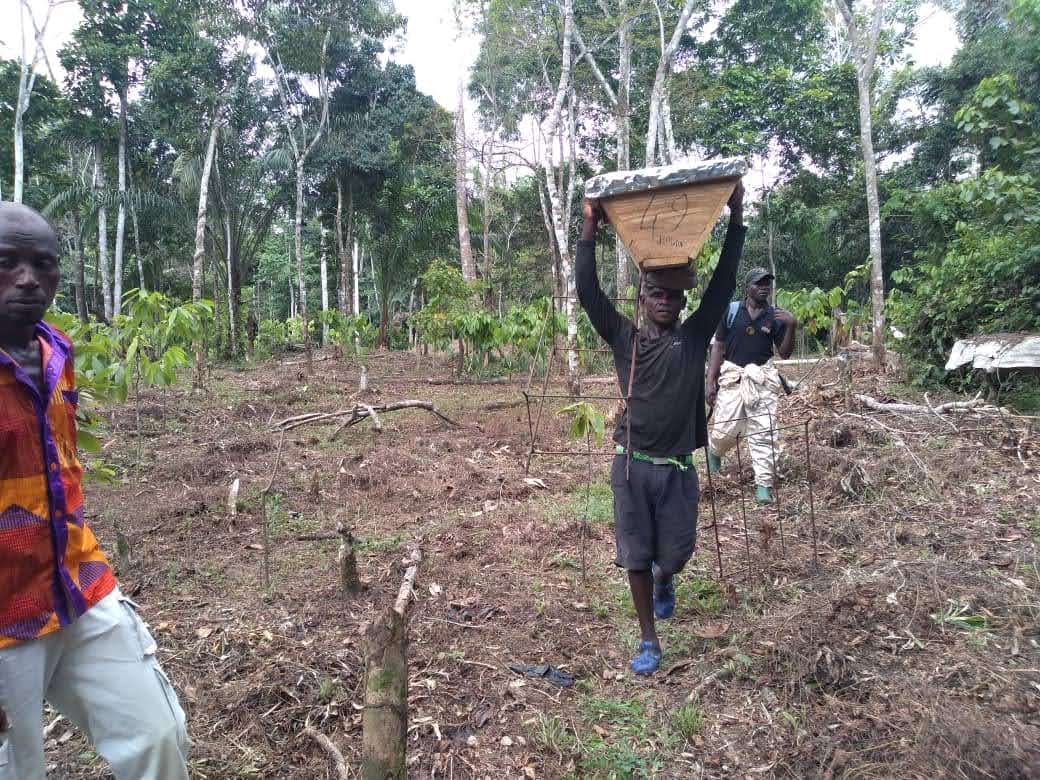
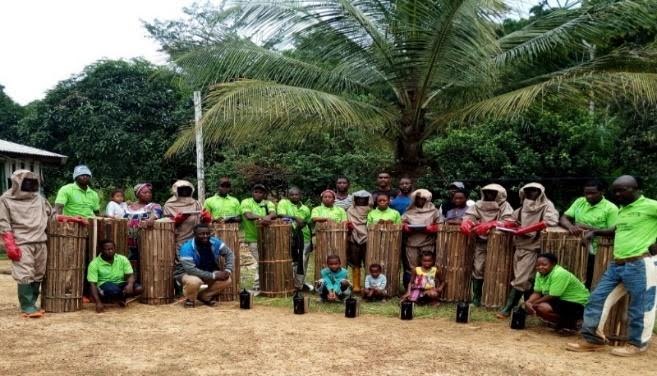
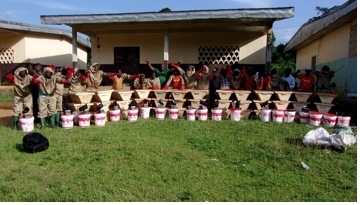
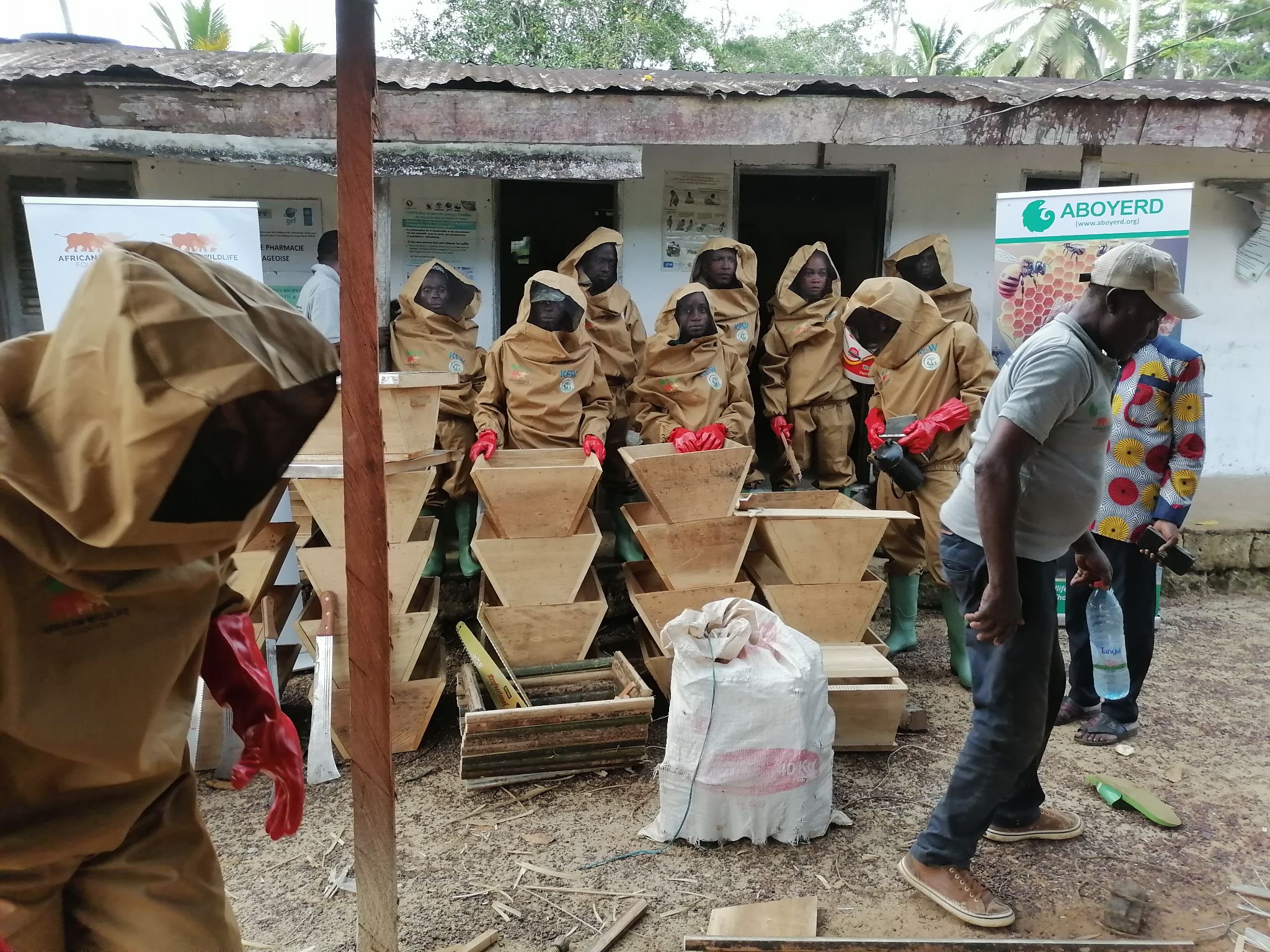
The provision of alternative income-generating activities is one of the most widely-used strategies at community levels to reduce bush meat consumption and trade while aiming to improve the livelihoods of local communities around protected areas. Human-elephant conflict is a pressing challenge in many parts of the Campo Ma’an National Park, particularly in areas where elephant habitats are in close proximity to agricultural lands and human settlements. To address this challenge, introducing apiculture, chilli pepper and citrus fruit trees as alternative income generating activities provides communities with sustainable livelihood activities while reducing Human-Elephant Conflict. Bee hives, chilli pepper and citrus fruit trees are nature based solutions that have the potential of wading off elephants, hence, providing communities with sustainable livelihoods while reducing human-elephant conflict.
Fabrication of Kenyan Top Bar Hives for the mitigation of Human-Elephant Conflict / Installation of Hives around Cocoa farms to deter elephants / Production and installation of Bee Hives in some fringe communities of the CMNP.
Habitat Restoration/Climate Change Mitigation
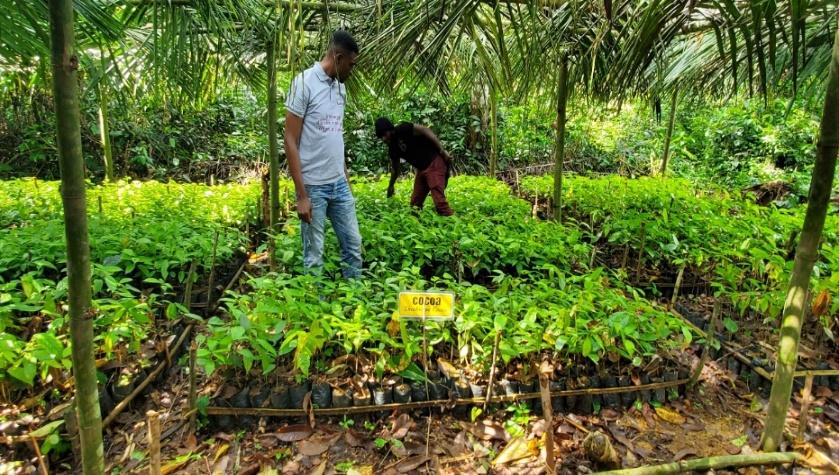
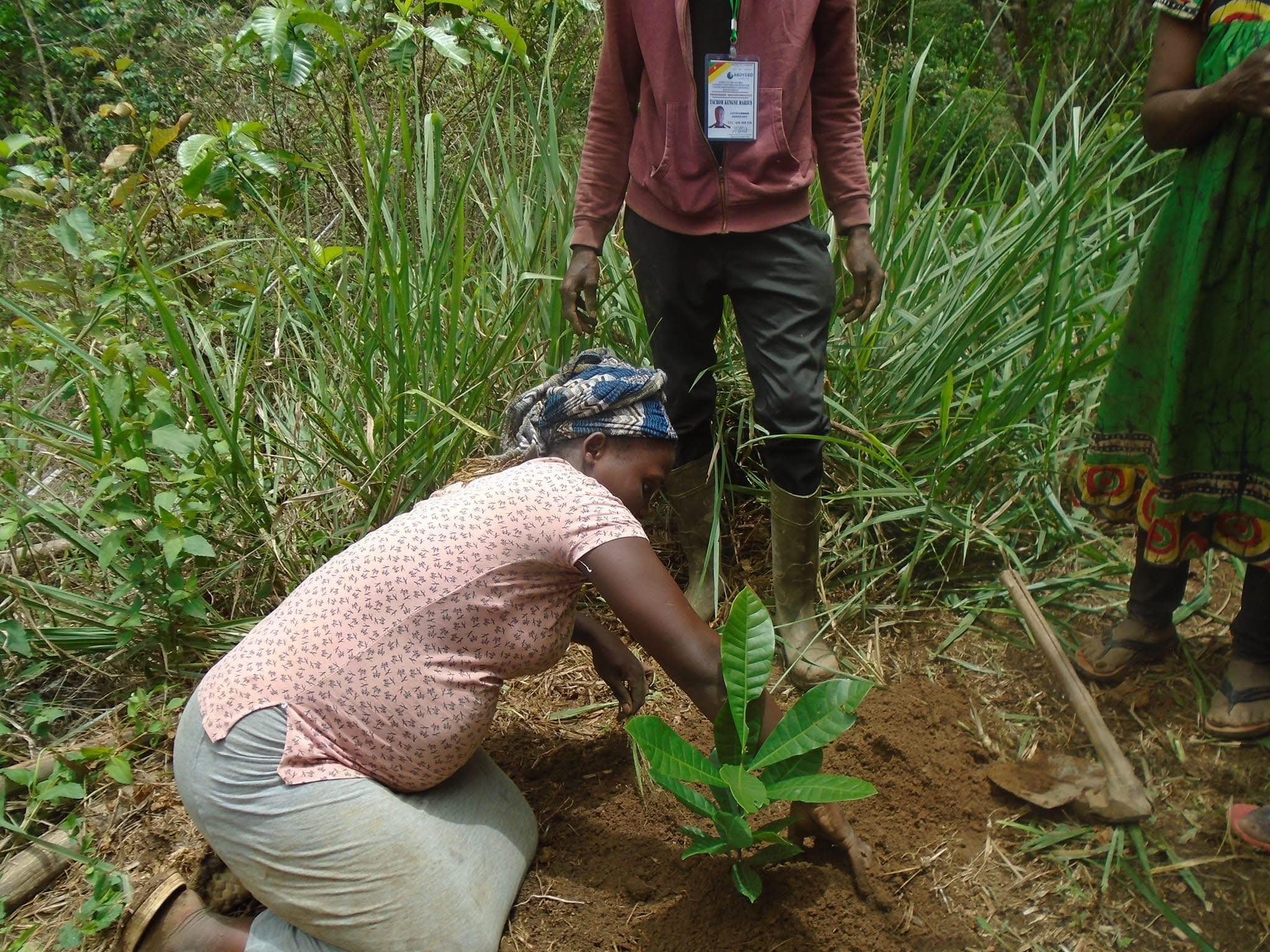
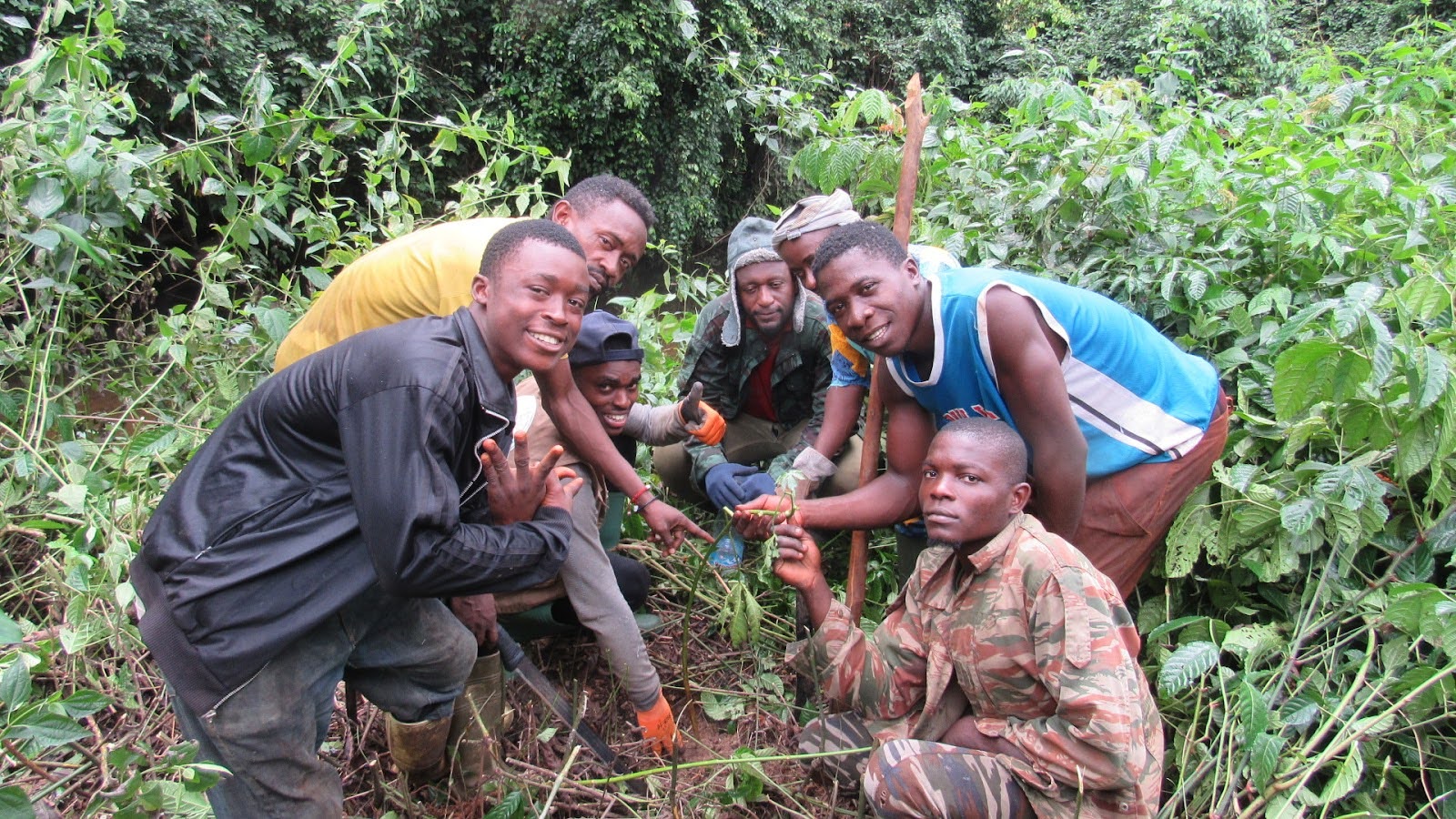
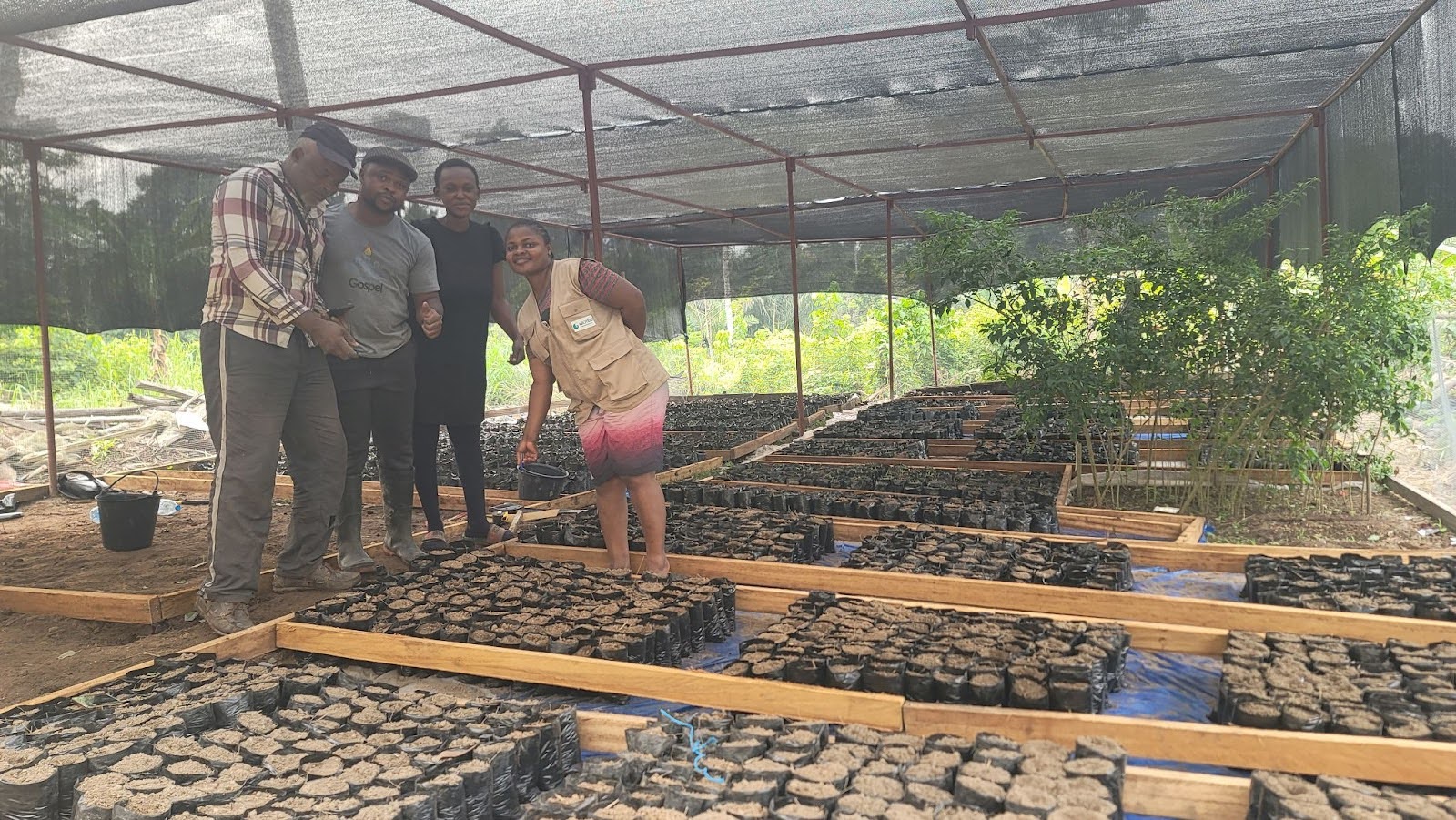
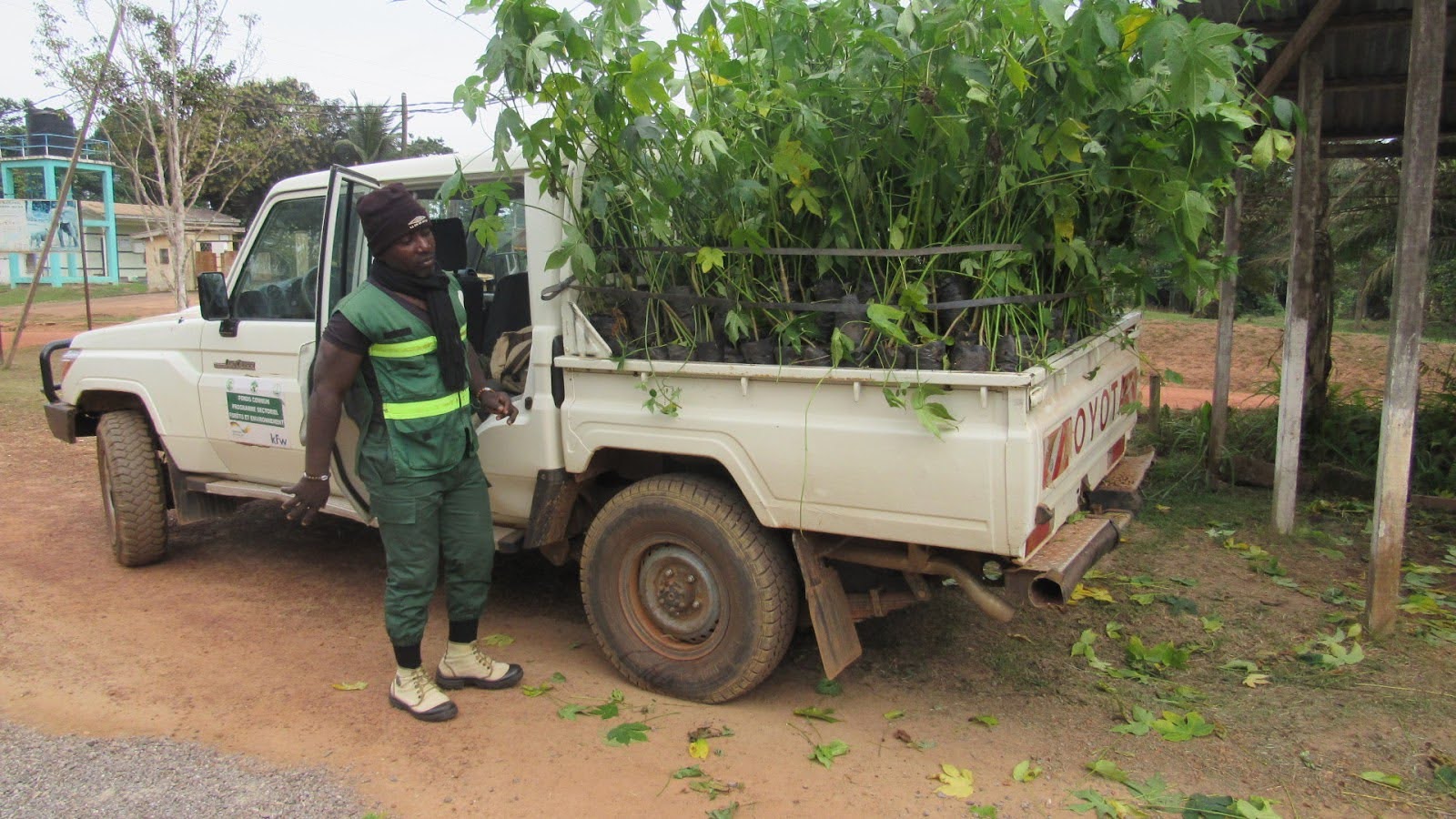
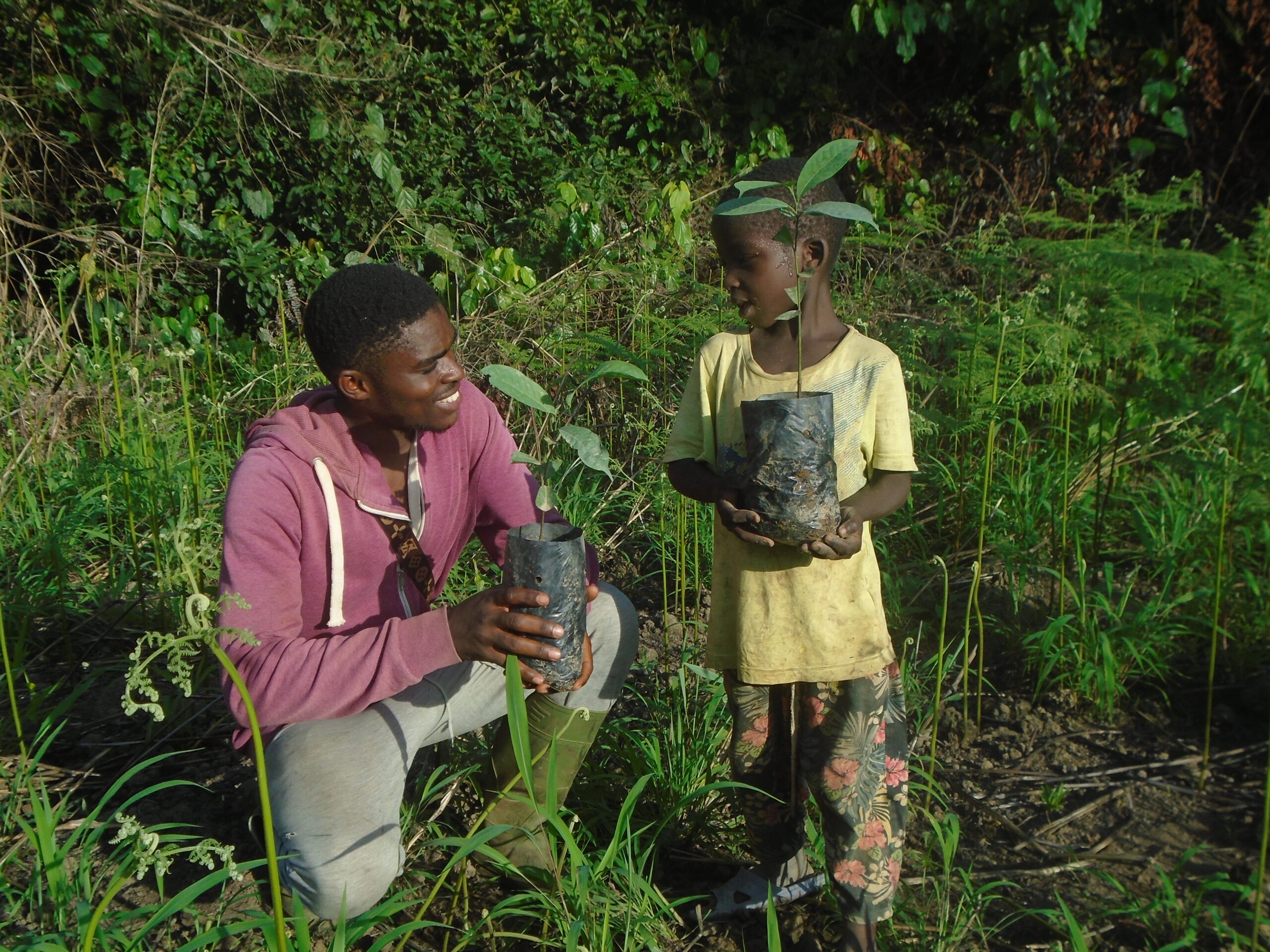
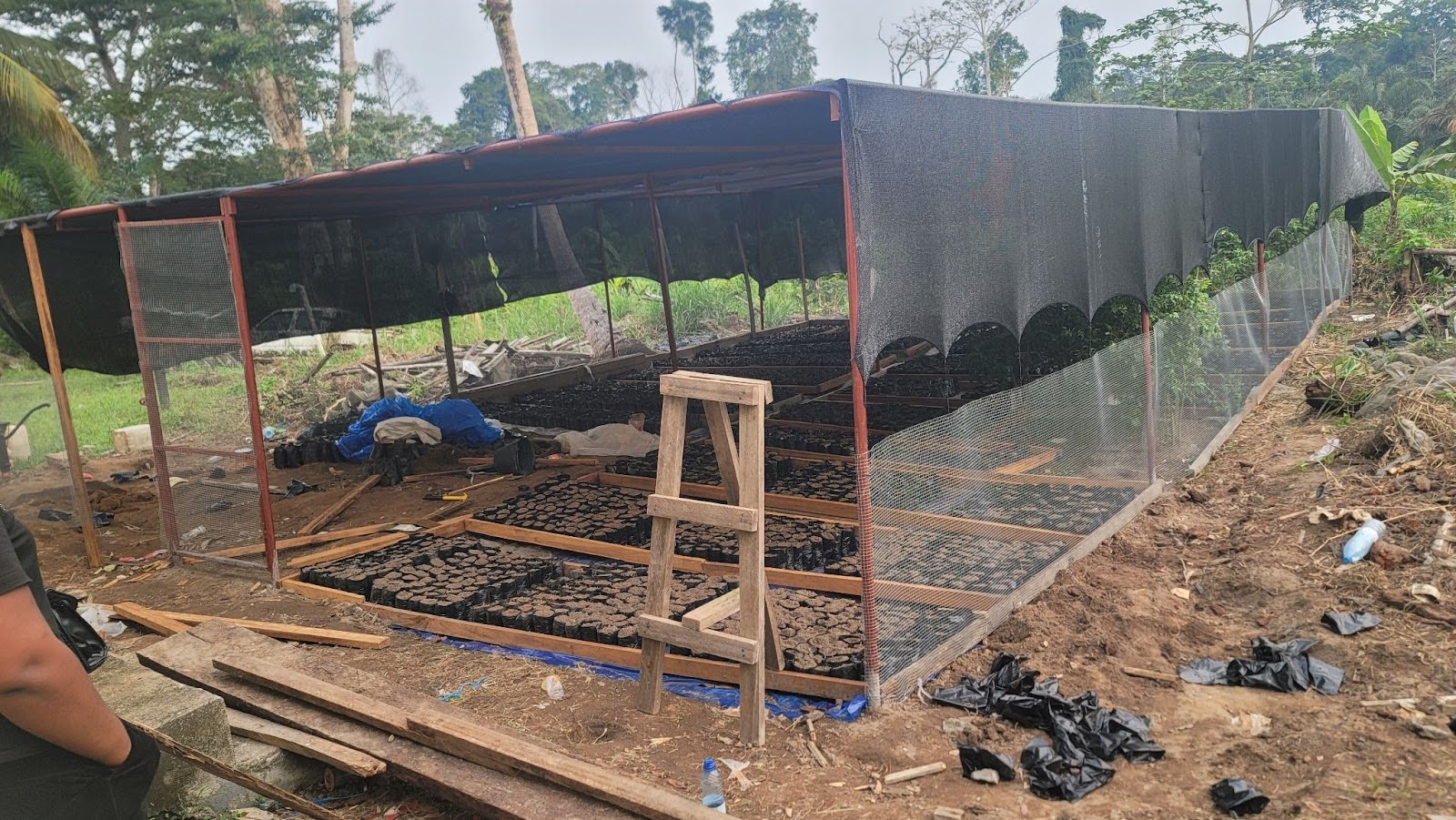
Managing and restoring wildlife habitats to reduce conflicts, such as restoring natural corridors for elephant movement or creating buffer zones between human settlements and wildlife habitats is an important mitigation measure for human-wildlife conflict. Nurseries of ecological and socio-economic tree species are progressively being established in some fringe communities of the Park with the goal of planting these trees in degraded forest patches to restore wildlife habitats, while fighting climate change.
Number of Trees Planted.
Hectares of degraded Wildlife Habitats restored.
Production and installation of Bee Hives in some fringe communities of the CMNP.
Hands-On Learning
Giving students practical experience in agriculture and environmental stewardship, with the goal of enabling them to create similar gardens at home.
To instill a love for nature and a responsibility for greening their surroundings, students have also been involved in tree planting initiatives. Over 210 ornamental trees have been planted within school campuses and key locations around Campo. Students have as well been distributed tree plants to plant in their homes, and trained in tree care and maintenance, to ensure survival and health of these trees. Worthy of mention, is the fact that the trees planted are doing well, and this is going a long way to inspire community members to take up tree planting as a serious activity. Tree planting is gradually becoming a norm in Campo and in addition to embracing sustainable agricultural practices, farmers are now incorporating tree planting in their practice, not just to improve soil fertility, but above all, as their contribution to the fight against climate change.
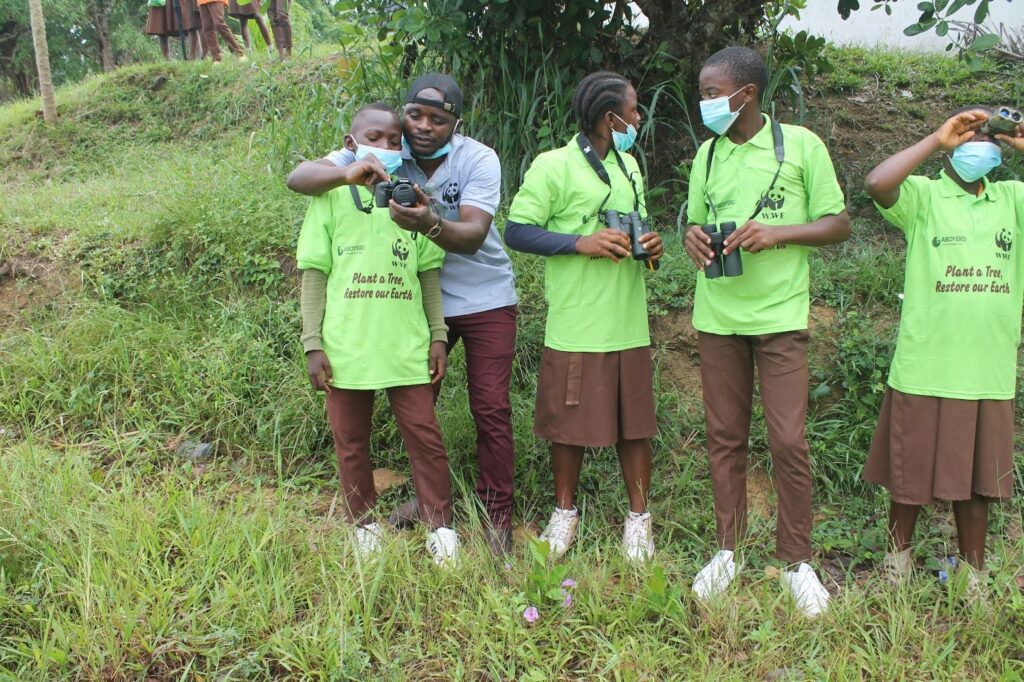
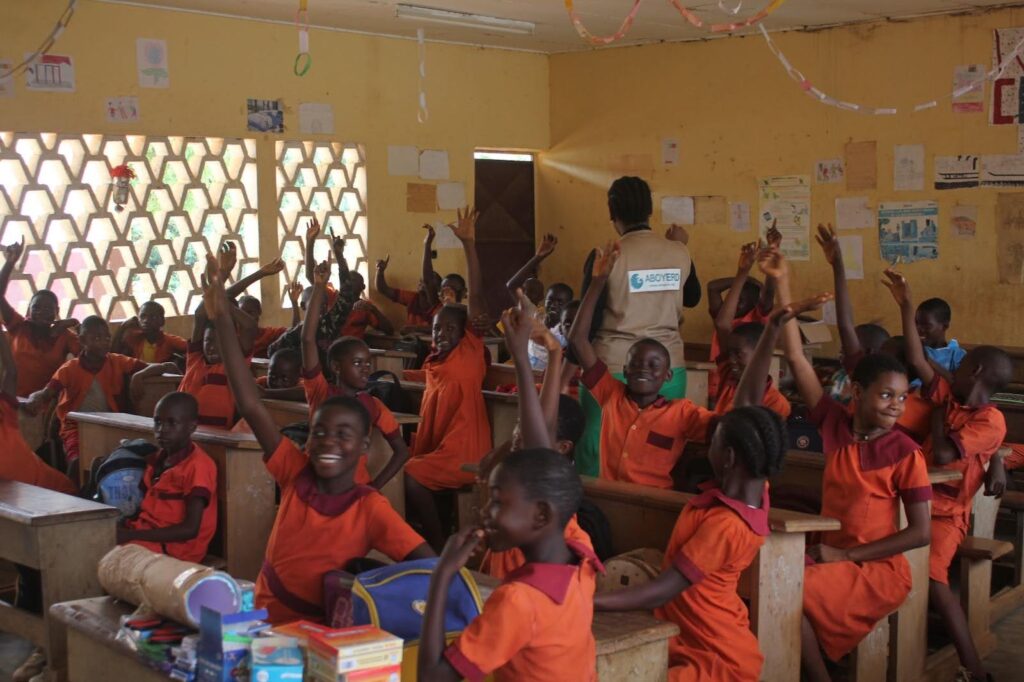

Wildlife Club in Sessions in Schools in Campo